The short answer
Yes. Peru is one of the only countries on earth where ayahuasca is legal, and it has been openly so for years. For most people researching an Amazon retreat, is ayahuasca legal in Peru is the very first thing they type — and it’s a fair question.
But “legal” and “safe” are not the same word, and almost everything that matters for you sits in the gap between them. So let’s answer the legal question properly, then spend most of our time on the one that actually protects you.
Why ayahuasca is legal in Peru
The legality rests on a single, deliberate decision. On 24 June 2008, Peru’s National Institute of Culture issued National Directoral Resolution No. 836/INC, recognising the traditional knowledge and ceremonial use of ayahuasca by native Amazonian communities as part of the Patrimonio Cultural de la Nación — the National Cultural Heritage.
Two things are worth understanding about that:
- It is not a drug law. Peru didn’t “legalise a substance.” It protected a living tradition — one it treats as a pillar of Amazonian identity — and committed to preserving it.
- The protection is for the ceremony, not the chemical. When Peru signed the 1971 UN Convention on Psychotropic Substances, it specifically carved out ayahuasca, and the San Pedro cactus, for traditional use.
There’s one line in that 2008 decision that tells you almost everything about how to travel here well. It drew a clear distinction between the protected, sacred, traditional ritual — and use that has been stripped of its context, turned consumerist or commercial. The law protects the first. It was never meant to bless the second.
So is it legal for tourists?
In practice, yes — visitors can lawfully take part in ayahuasca ceremonies in Peru, which is exactly why the country has become the world’s leading destination for ayahuasca tourism.
But notice what that 2008 framing quietly does: it ties the legal protection to context — a genuine ceremonial setting, held by people who carry the tradition. And it places the responsibility for your safety not on a government inspector, but on the people running the ceremony. There is no national body that licenses ayahuasca facilitators or grades retreats the way a hospital is inspected.
That gap is the single most important thing to understand before you book. It’s also why we verify every retreat ourselves before it ever appears on this site.
What “legal” does not mean
This is the part most pages skip, and it’s the part that keeps people safe. In Peru, legal does not mean:
- Regulated for safety. No official body certifies most retreats. The quality range runs from genuinely excellent to genuinely dangerous.
- Automatically screened. Ayahuasca can interact badly with some prescription medications — certain antidepressants in particular — and isn’t suitable for everyone, including some heart conditions and psychiatric histories. A responsible centre screens for this carefully before you arrive; a careless one never asks. We explain the medicine itself, without dosing or medical advice, in our ayahuasca guide — but that conversation ultimately belongs with you and a doctor.
- Risk-free. The surge in tourism has brought real harm too: people posing as healers, ceremonies run without proper care, outright exploitation. Legality is your starting line, not your safety net.
The honest version: in Peru, the law has done its part. The rest comes down to the centre you choose, and the questions you’re willing to ask. Our 10 questions to ask before you book exists for exactly this moment.
Bringing it home: is it legal where you live?
Peru’s protection ends at Peru’s border. DMT — one of ayahuasca’s active compounds — is controlled internationally under that same 1971 Convention, and remains illegal in most countries, including a Schedule I classification in the United States. Two practical things follow:
- Never try to carry ayahuasca, or its plants, out of Peru or into another country. That’s a serious criminal matter, entirely separate from anything about ceremony.
- Your experience is lawful where you do it — not necessarily where you’re from.
We’re a discovery and education platform, not lawyers — see the note at the foot of this page.
Where in Peru: Puerto Maldonado and the deep Amazon
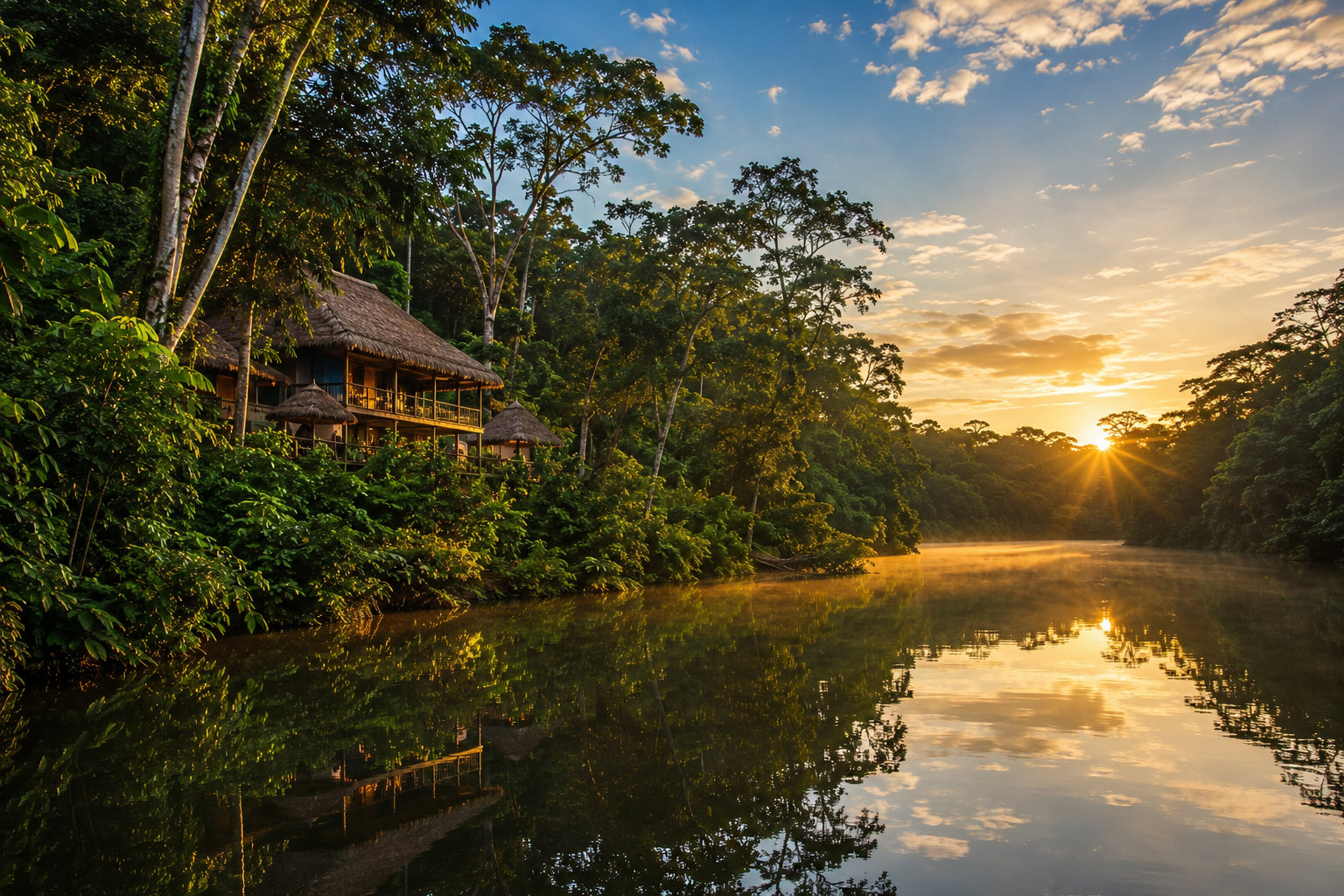
If you’ve read this far, the next question is where. Peru has two broad gateways: the highlands around Cusco and the Sacred Valley, and the lowland rainforest itself. For the true deep-jungle experience — river, canopy, real remoteness, the sound of the forest at night — Puerto Maldonado is the classic gateway to the southern Peruvian Amazon.
It’s also where choosing well matters most. Far from any city, you’re placing real trust in the people holding the space. That’s the whole reason we built this site the way we did.
How to choose a retreat the law won’t choose for you
Since no regulator does it for you, here’s the short version of what a responsible centre looks like:
- Genuine medical and psychological screening before you travel. If they don’t ask, that’s your answer.
- Experienced facilitators and a clear duty of care — including exactly what happens if a ceremony becomes difficult.
- Real respect for the indigenous tradition the 2008 law was written to protect.
- Honest, specific answers to hard questions — never pressure, never hype.
We go through all of it properly in 10 questions to ask before you book, and you can read how we verify every retreat before we list it.
A last, honest word
Ayahuasca being legal in Peru is genuinely good news. It means you can seek this in the place it comes from, held by people who have carried it for centuries — rather than somewhere it’s been torn from its roots. But the medicine deserves respect, and so do you. Go slowly. Choose carefully. Ask everything. There’s no prize for rushing.
If you’re reading this from a dark place rather than a curious one, please know there’s no hurry to decide anything — and there is real support available right now. You’ll find it at the foot of every page on this site.